
Wiener Linien Bau
Tomash Schoiswohl

-
© -
© -
© -
© -
© -
©
WIENWOCHE
Crossing a displaced border
The historic border which the ‘Linienwall’, the outer line of fortifications for Vienna, once etched around the city still exists today, yet mostly as a traffic structure. But where are the new borders in the city? The exhibition ‘WIENER LINIEN BAU’ examines which lines of the former fortifications and today’s Vienna Transport Services are meandering through Vienna: do they connect or separate?
From Sankt Marx to Spittelau – the ‘Linienwall’ of Vienna (1704–1894) drew a dividing line through the city of today. Free flow was only granted to the capital. Today, this also flows along the lines, though now they are the underground lines of Vienna’s transport services: along the newly planned U2 line is where individuals prefer investing in property. Citizens were made to think of the ‘Linienwall’ as a protective structure. But whom did it protect? Property and the tax system. The house rules of the Vienna Transport Services, on the other hand, protect us from ourselves: on trains, trams, and busses we are not to drink alcohol, not to beg, and must not carry pointed objects – anyone who does not fit into the picture or has no money for a ticket is excluded. Yet who protects against attacks and racial discrimination? Why has no one built a campaign barrier against racial slurs on public transport?
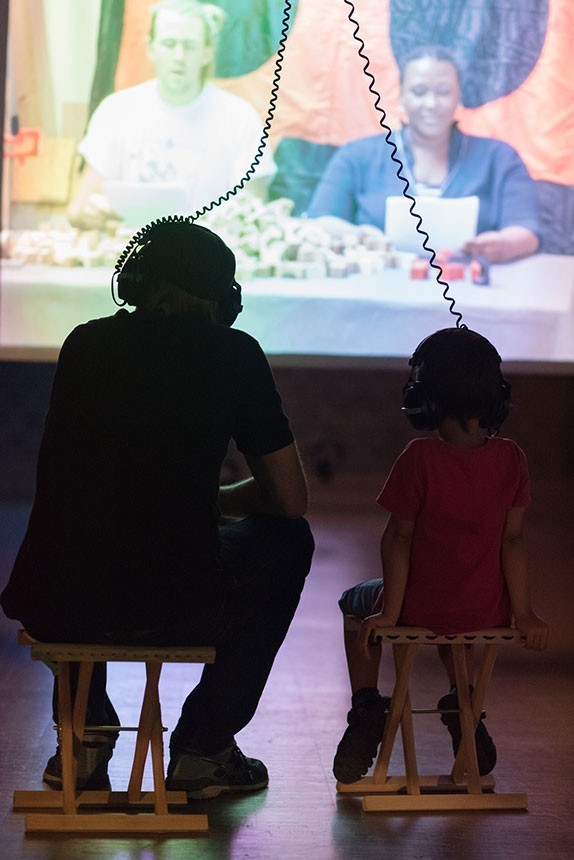
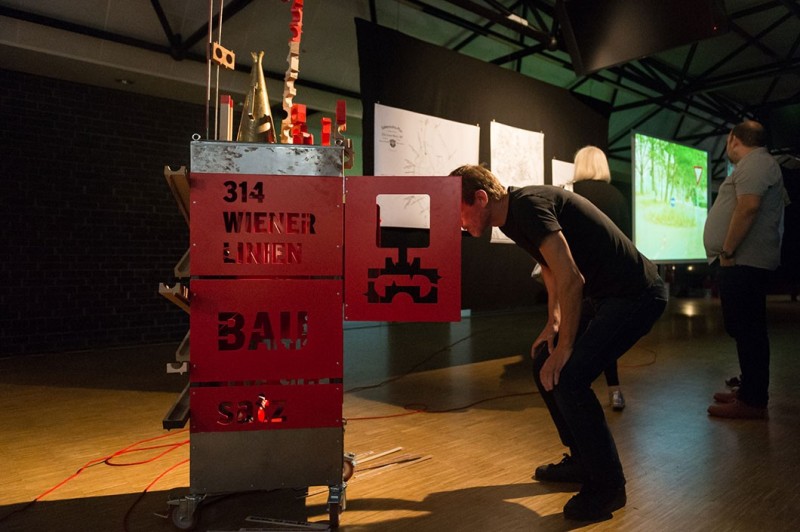
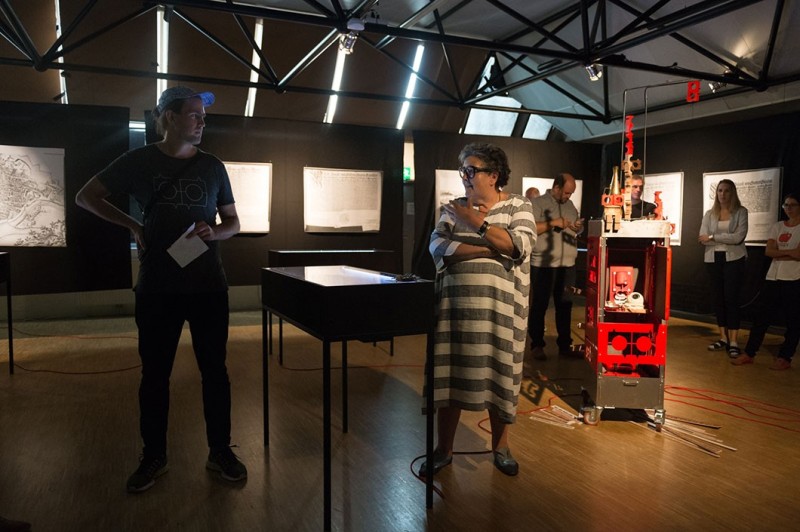
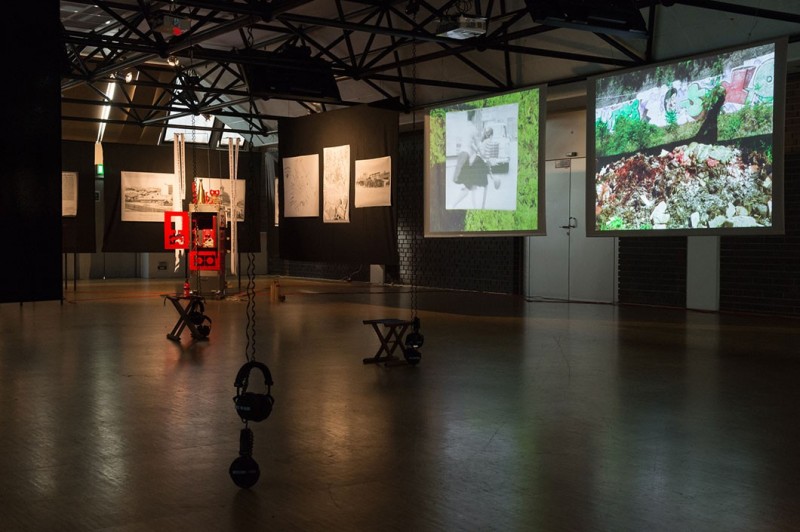
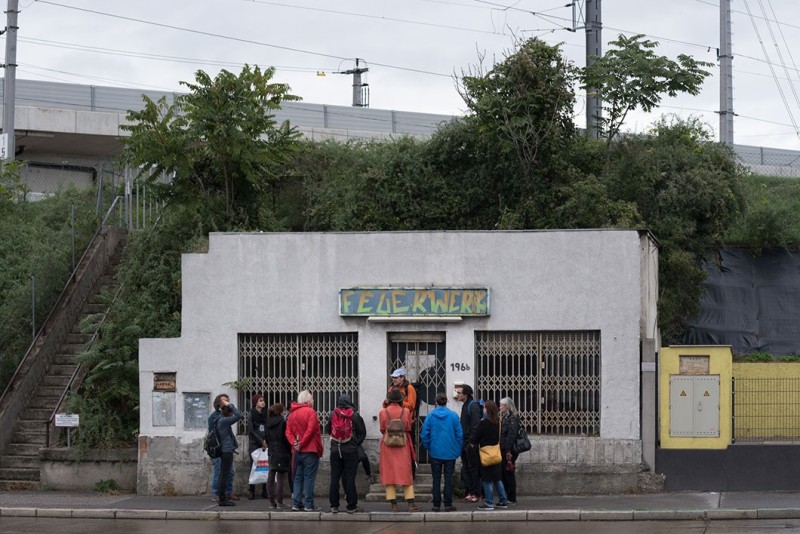
In Spittelau, at the site of the former University of Economics, the exhibition WIENER LINIEN BAU examines the overlapping of Vienna’s historical lines with those of the city’s public-transport system as it is today. Unlike the rampart, the new underground line is intended to connect people and neighbourhoods. However, a citizens’ initiative in the neighbourhood of Matzleinsdorferplatz fears that just like once the wall, the planned U2 would separate the 10th and the 5th districts more than connect them. More information can be gained during the city walks of WIENER LINIEN BAU, where not only the remains of the historical walls but also forms of resistance against expropriation and valorisation are explored – both those of yesteryear and today.
EXHIBITION CONCEPT, NARRATOR:
Welile K. Giorgi
EXHIBITION DEVELOPMENT:
Juliana dos Santos
PRODUCTION:
Julia Mitterbauer
CAMERA, FILM AND PRODUCTION:
Juri Schaden
PRODUCTION:
Matthias Schoiswohl
CONSTRUCTION:
Johann Schoiswohl
CITY WALK:
Anton Tantner
Related Events
There are no events for this project
